
|
There is a revolution going on, and it involves your posture. Until about fifteen years ago, humans had never (repeat, NEVER!) spent minutes or hours at a time hunched over a tiny handheld communications device. Although hands are attached to arms, humans rarely lift these arms to bring this communication device closer to the eyes. In order for the visual organs to receive sensory input from this communications device, therefore, humans have adopted a posture that is brand new in evolutionary science (repeat, BRAND NEW!). Humans have read scrolls for thousands of years and books for hundreds of years, but a device of this miniscule size yet gargantuan human impact has been heretofore unimagined (repeat, UNIMAGINED!).
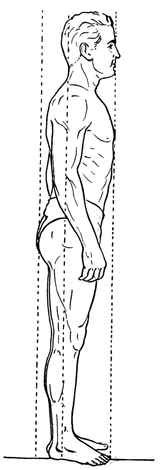
The human body is specifically constructed to stand straight and move gracefully. In fact, many structures of the body only work properly when the body is in motion, such as the veins, the lymph system, muscles, bone strength, intervertebral discs, and so on. The problem with the woman texting (in the picture on the left) is that she is neither standing straight nor moving (except for her thumbs... more on that below). Our brand-new habit of using smartphones is causing a direct confrontation with thousands of years of human development, and the resultant problems are part of the syndrome which has been called Text Neck. Text Neck can cause neck pain, back pain, headaches, and many other conditions. Altered posture can have a severe effect upon the body. From an article in CNN: "Text Neck is not just a texting problem," says Dr. Dean Fishman. "Text neck is a gaming problem. Text neck is an e-mailing problem." More from the same article: According to the Kaiser Family Foundation, 8- to 18-year-olds spend an average of seven and a half hours using "entertainment media" every day. Many people find it hard to believe that their smartphone habit can impact their health, but the effects are undeniable. Chiropractors and physical therapists are already seeing the beginnings of a trend. As Dr. DiAngelis asks, what will humans look like after twenty or thirty years of smartphone addiction? The American Chiropractic Association has compiled some helpful hints regarding proper smartphone use: • Sit up straight with your chest out and your shoulders back. As a sidenote, it is also important to remember that texting can lead to arthritis of the thumb down the road due to overuse unless care is maintained to keep your thumbs in a neutral position. It is a good idea to demonstrate your texting habits and posture to your chiropractor. Ask for advice on how to minimize the health impact of your daily habits.
0 Comments
Your comment will be posted after it is approved.
Leave a Reply. |
Categories
All
DisclaimerUnless otherwise attributed, all content is written by Kyle Johnson, DC, of Johnson Family Chiropractic of Peoria.
All images used are under Creative Commons license. Although every effort has been made to provide an accurate description of our chiropractic care and its benefits, the information given on this website and blog is not intended to be, nor should it be interpreted as, medical advice for any condition. If you have any questions regarding your condition, you should seek the help of Dr. Johnson in person, so that he may properly assess your condition. This blog is provided by Johnson Family Chiropractic of Peoria, S.C., proudly located in Peoria, IL. |

 RSS Feed